
2020-2021 Sagan National Colloquium
As we celebrate 100 years of business classes at OWU, this Sagan National Colloquium explores how the liberal arts contributes to the best business ideas, and how business can empower students working across the disciplines to pursue what they love and create positive social change.
Special Registration for OWU Alumni
Please use the button below to register for this year’s SNC. Note: This is only for OWU Alumni. All others can register for each specific SNC event via the Register Here link associated with each event in the below schedule.
Register for This Year’s SNC (OWU Alumni ONLY)
Note: All of these virtual events will take place online at 7 p.m. and will last for approximately 60 minutes unless otherwise noted.

February 10 – Widen Your Lens: Why MBAs Need Melville and Startups Need Shelley
Dr. Robert Lloyd, a management professor at Fort Hays State University, discusses why he incorporates classic literature into his business classes and how students and business leaders can train themselves to use literature as a source of insight and competitive advantage.

February 16 – Business and the American Landscape
Dr. Ted Steinberg, a history professor at Case Western University and author of Down to Earth: Nature’s Role in American History, will discuss how business has shaped the United States’ physical landscape historically, and today.
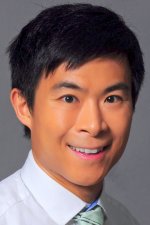
February 18 – Purpose, Profit, and the Responsibility of Business
Dr. Alex Edmans, a Finance Professor at London Business School and the author of Grow the Pie: How Great Companies Deliver Both Purpose and Profit, will discuss the role of business in today's society. Business is often accused of degrading the environment and exploiting both workers and consumers. It is also frequently called upon to prioritize consumers' concerns about issues such as climate change, equity, and diversity. But can business realistically serve a social purpose and deliver a profit too?
Note: This event will take place at 12 p.m. EST.

March 2 – Artificial Intelligence in Marketing: Current Practice and Ethical Considerations
Jim Sterne, author of Artificial Intelligence for Marketing, will discuss how AI is being used in business today, and what ethical questions business leaders must consider as they implement AI tools.

March 18 – Fair Employment is Good Business
Dr. Jennifer Delton, a history professor at Skidmore College and author of Racial Integration in Corporate America, will discuss how some businesses led the way in creating an integrated society in the era before the Civil Rights Act.

March 22 - The Detroit Hustle: Creating New Ecosystems for Entrepreneurship
Dr. Courtney McCluney, an Assistant Professor of Organizational Behavior in the ILR School at Cornell University, discusses her research in Detroit’s entrepreneurial ecosystem. Her multiyear, ethnographic study explores how entrepreneurial support organizations’ work in a resource-constrained environment can promote equity and inclusion for Black women entrepreneurs. Her analysis of this ecosystem has important implications for organizations seeking to create positive outcomes for entrepreneurs and under-developed communities across the country.

March 25 – Faith and Work
Note: This event is co-sponsored by the Religion Department and the Merrick Lecture.
Dr. Miroslav Volf, the Henry B. Wright Professor of Theology at Yale Divinity School and the author and editor of over 20 books and 100 scholarly articles, will explore what kinds of lives are worthy of our humanity in his lecture. We are deeply attracted to the idea of lives worthy of our humanity yet find it difficult to pursue such a life. We spend most of our lives working, in the broad sense of the term, to acquire various means for life without having a clear sense to what end these means should be used. He imagines the lecture as an invitation to pursue a life worth living — and to find meaning in our work by aligning it with the pursuit of a life worthy of our humanity.

March 29 – Women in Entrepreneurship
A panel of female entrepreneurs discusses the opportunities and challenges of being a female entrepreneur. Featured panelists will include:
- Kara Trott ’83, Founder & CEO of Quantum Health. Ms. Trott brings the perspective of an entrepreneur operating a large and well-established business.
- Sonya Trent-Pellom, Founder & CEO of Exquisite Wines and Cigars. Ms. Trent-Pellom brings the perspective of an entrepreneur operating a business that is small but growing.
- Suzan Kounta, Co-Founder of Thiossane West African Dance Institute. Ms. Kounta brings the perspective of an entrepreneur pursuing goals that are social and cultural in nature, and are not primarily about profit.
- Barbara MacLeod, OWU Professor of Business Administration, active angel investor. Prof. MacLeod brings the perspective of an investor who strategically supports entrepreneurs, and can offer insight into the world of startup funding more broadly.

April 7 – Nature-Inspired Innovation: How Biomimicry Can Lead to Radical Business and Sustainability Advancements
Jared Yarnall-Schane, Entrepreneurship Director for the Biomimicry Institute, discusses how studying biology and other natural sciences can lead to business breakthroughs.

April 22 – Billy Vickers: Building One of the Largest Black-Owned Businesses in the Nation
Modular Assembly Innovations founder and CEO, Billy Vickers, discusses how his philosophy of servant leadership and seeking a diversity of perspectives has helped him build one of the largest black-owned companies in the country.
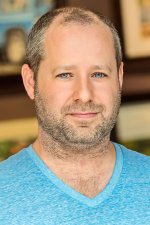
April 27 – Art and Entrepreneurship: Turning Your Passion Into a Business
Josh Moulton, professional artist and gallery owner, discusses his journey from artist to entrepreneur and the business skills creators can cultivate to equip themselves to take command of their careers.

May 4 – Manage Like a Coach
Dr. Jay Martin, OWU soccer coach and professor of Health and Human Kinetics, discusses what his coaching philosophy has to teach managers in the world of business.
Contact Information
Location
Ohio Wesleyan University
61 S. Sandusky St.
Delaware, OH 43015
61 S. Sandusky St.
Delaware, OH 43015
Social Media Hashtags
#snc2021
#ohwooo
#ohwooo